Diagnosis
Puzzling Symptoms
Troy Warshel started having abdominal pain and other gastrointestinal symptoms in October. With his wife Jodi by his side, Troy had a frustrating series of appointments and imaging tests, pursuing the possibilities of acid reflux or even a rare parasitic infection picked up in the Middle East during his military service. Troy was finally scheduled for a colonoscopy 2 months later. Having had a negative FIT screening test in the past, colorectal cancer was not in mind for Troy and Jodi, but the senior doctor in the recovery room told them, “We found a tumor”. They were unable to get the colonoscope past the mass. Because of the severity of the blockage, Troy had surgery ten days later, and stage III colorectal cancer was confirmed.
Chemotherapy
Extreme Side Effects
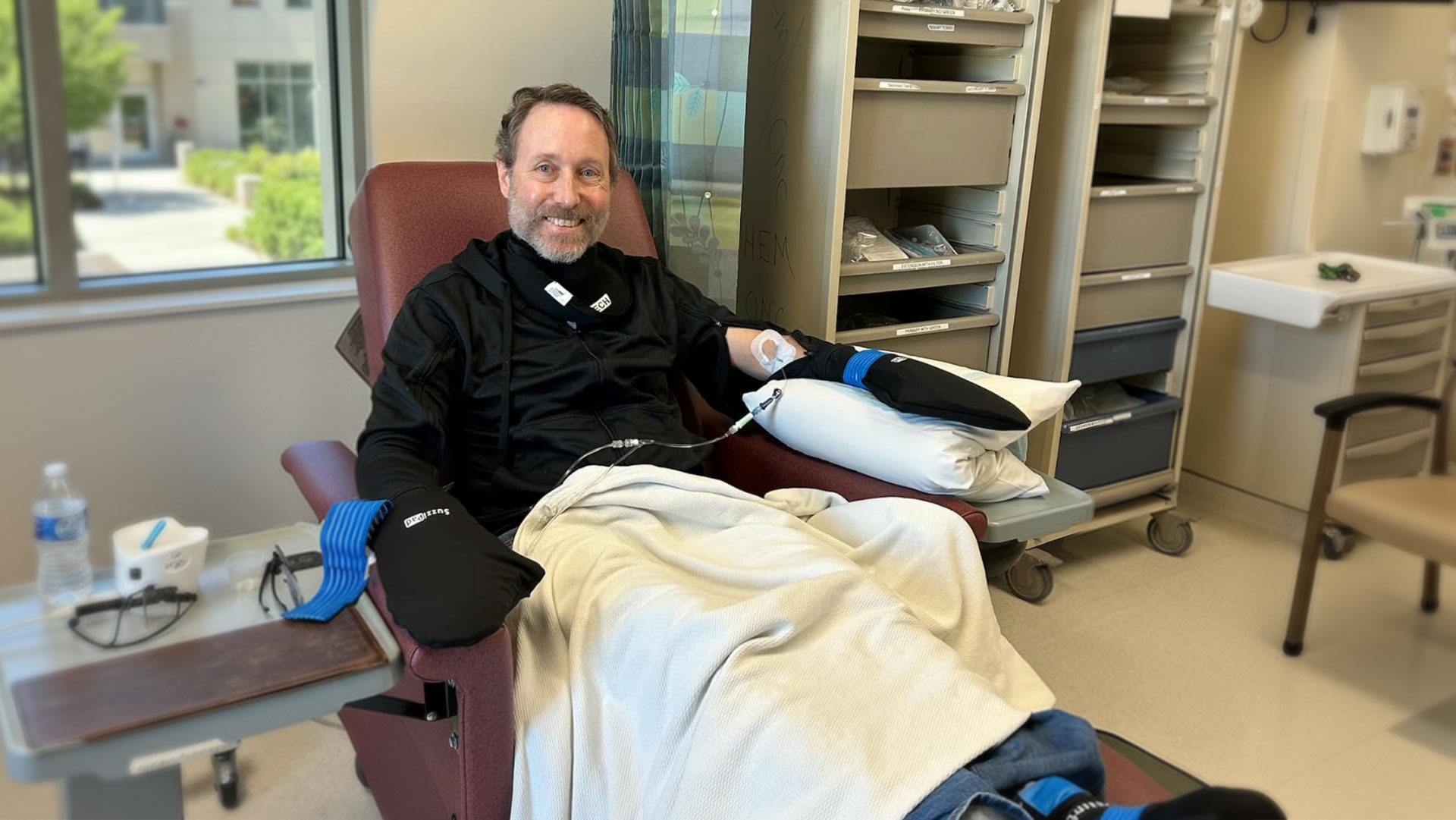
As Troy recovered from surgery, the couple dove into learning everything they could about his upcoming chemo, its side effects, and how to prevent them. Troy says, “I knew it was going to suck, I was kind of prepared for that.” Jodi researched icing protocols to prevent peripheral neuropathy from oxaliplatin and mouth rinses to prevent mouth sores from capecitabine. Troy began his first cycle, an oxaliplatin infusion and 2 weeks of capecitabine pills. “I felt so bad, I didn’t get out of bed for 9 days, it was brutal,” says Troy. Jodi adds that at first, “We thought “no pain, no gain”. That’s what chemo is. But I knew, something’s not right.”
Jodi was tireless in her efforts to find out why Troy was having such terrible symptoms. The night before his next infusion, just as she was about to put down her phone and go to bed, Jodi came across a comment in an online forum asking about DPD deficiency testing. She discovered the website of Advocates for Universal DPD/DPYD Testing and recognized Troy’s symptoms. “This is it! This is 100% - this is it.” She went on to read the devastating stories of patients with DPD deficiency who died from the toxicity of capecitabine and fluorouracil because they lacked the enzyme, DPD, that would break down those drugs in their bodies.
Advocacy
Jodi’s Research Saves Troy’s Life
At Troy's appointment the next day, Jodi asked his team if he had been tested for DPD deficiency. She was told it wasn’t indicated, and that Troy’s lack of mouth sores did not line up with having DPD deficiency. Jodi was sure that the mouth rinses Troy had been using to prevent mouth sores were working, masking this important symptom of DPD deficiency-associated capecitabine toxicity. Jodi spoke up, suggesting that the severity of Troy's symptoms may also appear reduced due to his unusually high pain tolerance and excellent physical fitness, and asked that he have DPD testing anyway. The team agreed, the DPD deficiency test was ordered, and together they decided to give Troy another week of recovery between cycles, and to reduce his chemotherapy dose because of intolerable side effects.
A week later, Troy began his second cycle with the reduced dose. The following day, Troy received a call from his oncology team. His testing showed that he has intermediate DPD deficiency. His body has a reduced ability to break down capecitabine, leaving him with dangerous amounts of it in his system. Troy’s dose needed to be reduced even further to prevent a further severe toxic reaction. Troy notes, “I couldn’t advocate for myself. Without Jodi, I would have been dead, for sure. Not a doubt in my mind.”
Knowing is worth the wait
NED — No Evidence of Disease
Troy’s chemotherapy proceeded with a reduced dose of capecitabine, and he is now “NED”; he has no evidence of disease. But DPD testing was not the only biomarker testing Troy had, and his other results have also changed his care. Troy’s colorectal cancer has a mutation in the BRAF gene which means he has a higher risk of his cancer returning. Now that they have that information, Troy’s team has planned his follow-up care to include more frequent monitoring, including imaging scans, blood tests, and colonoscopies to look for any sign of the cancer recurring. Metastatic colorectal cancer patients who have Troy’s particular BRAF mutation, known as V600E, may be eligible for targeted therapy with a BRAF inhibitor drug.
On their experience with biomarker testing, Jodi starts, “You’ve just got to ask the questions. Knowing your subset and knowing that every single cancer is different...” and Troy finishes, “Knowing your cancer is critical.”